Thursday, 30 June 2022

Carrying emotional baggage?


Is your past sabotaging your future?

Are you carrying emotional baggage?

Is emotional baggage thwarting you?


Many of recognise when others  are carrying emotional baggage.

We notice how the baggage stops them from living a full and rewarding life, common examples how emotional baggage weighs people down so their lives are darker than they should be include,

·   Preventing them from committing to a relationship

·   Blocking them from moving jobs

·   Handicapping them in career development

·   Low self esteem and lack of self-worth

·   Self-destructive habits and thought patterns

·   Playing small and not fulfilling their potential

We are often told to deal with our emotional baggage, so we can get on with our lives, yet are seldom if ever shown how to do it so we can be free.

Therapeutic coaching is a new, and ground-breaking approach that hundreds of professionals are now using to enable them to move from status quo to success.

Using  Therapeutic Coaching to free you of the shackles and darkness of your emotional baggage has the potential to

·   Enable you to stand out in your chosen career / profession for all the right reasons

·   Be ahead of the trend curve

·   Enable you to connect with others more easily

·   Embrace an approach that successful people, like you, use to attain their goals

·   Reap the rewards on all that you have already invested

·   Free you of your emotional baggage that is holding you back

If you would like to ditch your emotional baggage and  be free, book an appointment today. You can book on-line use the blue book now button and choose between a Therapeutic Coaching session or a FREE CALL FRIDAY conversation

www.theinstituteofdentalbusiness.co.uk


Now is the time to ditch your emotional baggage


book online 

www.theinstituteofdentalbusiness.co.uk


If this message is not for you, please ignore it and pass it on to someone for whom it may be helpful,


Monday, 20 June 2022

Emotional spring cleaning, from a client's perspective.


Last week,  I was working with a client in the USA, my client was frustrated that she felt that other people were treating her like a child. This was having detrimental impacts on her relationship with her line manager with a knock-on impact to her attitudes to work. The final straw came when she was “mothered” by a stranger in a shop which left her feeling dis-empowered in her own life.


We set up a therapeutic coaching session, where we were able to identify the source event that led to all the subsequent emotional triggers, heal the trauma, eliminate the emotional triggers and unwanted feelings.


From a coach’s perspective I observed

 My client initially remembered a triggering memory as an event that injured her pride and left her feeling unlovable. This childhood event was having ramifications in her present day.

 After the 30-minute coaching intervention

 My client recalled the same  memory, in general, but did not recall anything that seemed like it should have produced such a trigger. She now remembers it as a funny childhood moment and is confident about her future.


What my client said afterwards


“After our work, I was able to discuss a previously painful memory with my mother without the emotions, I can remember the event giggle and move on.”

You're the best, Jane!


In our homes have cupboards, lofts, cellars or shed where we store the clutter that we collect.

As we live life, we collect emotional clutter some, for some there are big traumas others the events are almost something and nothing yet leave an emotional trigger. We pack these events away in our emotional cupboards, lofts, and cellars, learning how to keep them locked away. Most of the time we are able to live successfully, keeping everything stashed away avoiding our emotional clutter and triggers, until, uninvited, it spills over and those overwhelming feelings come flooding out and we feel overwhelmed, unable to cope or be the best version of ourselves.


It’s hard for us to thrive when we haven’t processed our mental and emotional clutter.

This could be

 Previous unpleasant experiences

Old hurts and grudges we hang on to when we feel wronged

Traumas large or small.


Not dealing with emotional clutter eventually becomes overwhelming. In the same way we spring clean our homes disposing of the physical clutter, it is healthy to spring clean our mental and emotional cupboards and dispose of the mental and emotional clutter.


Clinging to hurts, trauma and nourishing grudges will eventually eat your soul, consume your happiness, and rob you of all progress. This clutter keeps you trapped in the past and will prevent you from accessing your future potential. It can be confusing to those around you who unknowingly step on unresolved emotional clutter firing a trigger to be greeted with an unexpected or inappropriate response.


Don’t wait until the spring, clear out your emotional clutter of the past today, so that you can experience the gift of the present.


For more information about our therapeutic coaching or to book an introductory Free Call Friday session visit www.theinstituteofdentalbusiness.co.uk


Common emotions clients ask me to assist them with emotional spring cleaning up include

  • Anger
  • Resentment
  • Humiliation
  • Regret
  • Hurt
  • Trauma
  • Pain
  • Discouragement
  • Bitterness
  • Shame
  • Sorrow
  • Grief
  • Powerlessness
  • Fear and phobias
  • Addictions


What would you like to get cleaned up?


To book an introductory Free Call Friday or therapeutic coaching session visit www.theinstituteofdentalbusiness.co.uk


“After our work, I was able to discuss a previously painful memory with my mother without the emotions, I can remember the event giggle and move on.”

You're the best, Jane!


Thursday, 24 February 2022

Whose Job Is It, Anyway? (and Swiss cheese)


This week I have been working with a client who has high and exacting standards. They boldly put excellence on their website and marketing materials as one of their values.


However, under the surface, in some areas, there is little in common between their values and what happens in practice.

Standards are slipping, the team is beginning so signs of a high turnover of staff, management structure is resorting to a dictatorial approach, and the is a creeping feeling of despondency.

Some of the team are superb, great communicators, going above and beyond, always anticipating, planning, looking to make things better for everyone else not least the patients. Others are very different.


As I spend time in the practice listening, I was reminded of this little story


“Whose Job Is It, Anyway?”

This is a story about four people named Everybody, Somebody, Anybody and Nobody.

There was an important job to be done and Everybody was sure that Somebody would do it.

Anybody could have done it, but Nobody did it.

Somebody got angry, because it was Everybody’s job.

Everybody thought Anybody could do it, and Nobody realized that Everybody wouldn’t do it.

It ended up that Everybody blamed Somebody when Nobody did what Anybody could have done.


Does this sound familiar, do you notice any similarities to your place of work?

 Remember, a problem can only be present in absence of a truth-full conversation.


I invited the practice to define the journey their patients through the practice. Each step of the way clarifying, leaving no element of guesswork, who is responsible for each function and who is the back up?

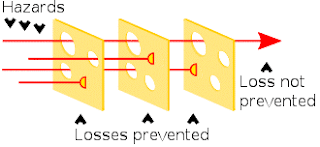
We also discussed the Swiss cheese model of risk management.


A receptionist told us how they had had an angry patient call, incensed that a dentist had not returned the requested call.

When we unpacked the events, we realised that the dentist had tried to call and the number on the computer was incorrect. It transpired that the patient had been in several times and the number had not been updated.

The team recognised they needed to add more layers of cheese to stop the hazard. These included.

  • Very clear and specific request for patients to check their personal details and medical history, rather than a casual “can you check this.” The reception team amend the details.
  • The clinician asks the patient to confirm their personal details.
  • The nurse is at the computer updating as the clinician is speaking with the patient, confidently asking for clarification where needed.
  • When telephone calls come in the receptionist, confirms the number they want to be called back on.

This may seem like duplication, and we all have experienced busy practices and things being missed without malintent.  Multiple layers of systems and processes prevent the hazards getting through.


Where in your practice would these concepts be useful?


Thursday, 6 January 2022

We can’t change events, together we can change your response.


The words that many of our callers are using are include

  • Angry
  • Worried
  • Scared
  • Bullied
  • Confused
  • Alone
  • Overwhelmed
  • Can’t cope
  • Afraid


What words are you using?


Therapeutic coaching can help you change your response to your situation, so you feel stronger and in control.


We can’t change events, together we can change your response.


Visit www.theinstituteofdentalbusiness.co.uk use the BOOK NOW button and make your appointment selection from


  • Speak with Jane - discover the services she offers
  • Free Call Friday
  • Bespoke Therapeutic coaching
  • Coaching in a Crisis
  • Taster Coaching Session
  • Discovery Call
  • Strategy Development
  • Success springboard coaching session
  • Bespoke Business Coaching
  • Bespoke personal Coaching
  • Career and Transition Coaching
  • Career and Transition Coaching - Taster
  • Discover Hypnodontics

Some of these sessions we offer pro-bono others are chargeable services.

Thursday, 16 December 2021

Less detail, more clarity


I have had an interesting week with coaching clients and as often happens there is a pattern in the client calls.

This week I had several clients who had been unsuccessful in finding solutions to problems, on their own, even though they had been trying hard, often, for months.


What I noticed was that the common strategy, that was failing, was they had been zoning in closer and closer getting in to more and more detail. This is a strategy that we as scientists are taught from a young age, to look down the microscope at ever increasing magnification.

Whilst in many instances magnification and detail provides the answers you need, it does not work all of the time.


If what you are doing is not delivering the outcomes you want, you have to use a different approach.


During the coaching sessions, I asked questions that enabled my clients to step back, to see the situation in a larger context. Curiously, when they had less detail and the bigger picture they found their answers.


Where would it be useful that you took a step back and saw things in the broader context so that you could grasp your solutions?


If you would like to experience how coaching enables you to find the answers you are looking for

visit www.theinstituteofdentalbusiness.co.uk use the BOOK NOW button and select the appointment of your choice from the drop down list.

Friday, 12 November 2021

Better questions mean. . . .


If you want a better outcome you need to ask better questions.


Many of us get stuck in a problem and cannot find a way out. Often this is because we are asking ourselves and our team problem orientated questions that keep us stuck in the past events.


If you want to move on into a brighter future that grasps your passion learn to ask future oriented outcome orientated questions

Examples of problem questions are;


  • What is your problem?
  • How long have you had it for?
  • Whose fault is it?
  • Who / what is to blame?
  • What is the worst / most recent example of this problem?
  • Why haven’t you solved it yet?


Examples of outcome questions are;


  • What do you want?
  • How will you know when you have achieved it?
  • What else will improve when you get it?
  • What resources do you already have which can help you reach your outcome?
  • What is something similar which you achieved the result you wanted?
  • What is your next step?

Next time you are in practice meeting and a problem needs solving, ask outcome orientated questions of the team. Notice what changes and the amazing things are possible as a result.


If you would like to know more about how I support dental practices in solving problems and resolving conflict, book a Speak With Jane call.

Visit www.theinstituteofdentalbusiness.co.uk/ use the BOOK NOW button and choose Speak With Jane from the drop down list.


I look forward to speaking with your soon.


In the meantime play with outcome questions and let us know your results.


Jane@IODB.co.uk

07989 757 884

https://www.theinstituteofdentalbusiness.co.uk/


Tuesday, 2 November 2021


Stop choosing confusion


Do you have a decision that you are finding difficult to make?


Examples of decisions dentists find difficult to make,

  • *  Reprimanding or dismissing a staff member
  • *  Leaving a toxic practice
  • *  Attending non-clinical training over clinical training
  • *  Focusing on private over NHS

I have worked with many dentists who bring to the coaching call decisions that they are finding difficult to make, they want the certainty they are making the right decision.


They have done the research, collected facts and figures, canvassed opinions, discussed options in many meetings and yet still are unable to make the decision they know they must make.

In every case the dentist instinctively knows the decision and action they must make, yet they procrastinate, and choosing confusion rather than clarity.

Once the decision has been made everyone reports how much lighter they feel and how much clearer their head is. Decision making is liberating.

 Rather than making things easier, avoiding making decisions creates burdens, people carry around baggage of unmade decisions which weigh you down until they become over-bearing and you crack.

When you do make difficult decisions you grow as a leader, your team respects you more, not least because they are desperate for you to take the difficult decision, more often than not, they agree with your instinctive, unspoken, unmade decision.

Tips to make decision making easier

  • *  Define your vision and culture, evaluate your options through the lens of your values and culture.
  • *  Work with a trusted coach who gives you time to time and keeps your thinking focused as you bounce ideas.
  • *  Acknowledge you are making the best decision you can right now.
  • *  Practice making decisions
  • *  Follow up a decision with an irreversible action.

Reasons why people, like you, avoid making decisions and choose to be confused.

  • *  People pleasing. You are never going to please 100% of people 100% of the time, and you do need to make decisions for the benefit of the practice, team, patients. and yourself.
  • *  Worried what stranger will say. Other people’s ,especially stranger’s, opinions don’t matter. Those who are close to you love and respect you will support you when you make tough decisions.
  • *  Fear of making the wrong decision. Acknowledge you are making the best decision that you can right now with the information you have available. Situations may change and with hindsight there may have been other options, that at the time aren’t available now. You may handle the conversation less than perfectly, you can learn and move on.

Not making a decision is actually making a decision; the question is does this serve you or sabotage you?

Make your decisions conscious and make ones that serve you

Make decisions frequently, collect only enough data and trust your instinct.

  • *  If you think a staff member needs remanding or dismissing, do it, lawfully
  • *  If you think you need to leave toxic practice, leave, find, or create a healthy one.
  • *  If you think you need to develop the non-clinical skill of dentistry, join a course
  • *  If you want to focus on private over NHS, up-skill your communication, customer service and clinical skills and do it

What is the decision that you have been putting off and must make?

What decision can you take before the end of the day?


If you would like to discuss anything that has been raised in this article, please contact Jane

Jane@IODB.co.uk