Thursday, 27 April 2017

I've just been blindsided


I was listening to an audible recording today and stopped in my tracks by the phase “Failure only occurs in someone who does not acknowledge their faults”
As I reflected on this I was remined about a recent conversation I had with a coaching client, who is currently taking their practice by the shirt-tails shaking it up and transforming it into what he wanted it to be when he first opened the doors. Over the years he had become busy being busy and lost sight of why he set the practice up and one day realized that it had drifted far from his original plan.

We spoke about Johari’s window, and how it describes what working with a coach can do.


For all of us we have areas that we know about ourselves that no one else knows, our strengths, weaknesses, passions, frustrations and fears etc.- This is called the hidden area. There are also things about us that others can see and we can’t, The blind area. There is an unknown area which neither our self and others know and also an open arena of information that you know about yourself and others also know. The model recognizes that the larger the open area is the more choices and control you have and therefore the more successful you will be. My client observed that my coaching was enabling him to increase his open area, discovering more about himself that he was able to share and learn more about his true self from / with others and this was making him a more respected, influential and empowering leader in his practice.  In his free flow reflection, he observed that the blind area in Johari’s window was very like the blind area on a lorry, that when you were in that location as a pedestrian or cyclist you were at risk of being killed.

He went on to reflect that the hardest and yet most rewarding aspect of coaching was that I had taken him from a place of unconscious incompetence, when he had no idea the mistakes he was making and the ramifications they were having to a place of conscious incompetence which he described as an “Oh my God moment”, when he looked into a metaphorical mirror and became aware of the costly errors he was making and the damage it was having on his family, his finances, his team and patients. My client expressed his gratitude that I then supported him giving him the information, support and space to think and decide, so he moved into a place of conscious competence.  And now he is reaping more benefits that he initially dreamed about as the coaching has moved him to a place of unconscious competence. Now he is excited about moving round the cycle again to discover more that he didn’t know that he didn’t know.

What he said about Transform you practice in 10 days.

 “Essential for anyone thinking about setting up a practice or having trouble running a practice  who is seeking ways to improve”

As soon as you are ready to take the first step and examine your practice, please feel free to use our free online tool, The BrilliantPractice Evaluation (BPE).  or use this in your browser  https://www.surveymonkey.co.uk/r/Briliant-Practice-Evaluation-BPE 

Many clients tell us that it helps them look at their practice honestly and unemotionally and others have found it an invaluable tool for creating and maintaining success.

So as I write this refection I am filled with enthusiasm for my next conversation with my coach so she can help me discover more of what is in my blind area.

Thursday, 20 April 2017


This morning on R4, there was a discussion about the FA profits/losses and mention was made that their staffing costs are 70% of their income.


How do your staffing costs compare, and what would you expect from them if you if you were paying your team 70% of your income?

Would love to hear your thoughts Jane@IODB.co.uk


Tuesday, 4 April 2017

Resentment is like an allergy


Resentment is like an  allergy


If you or someone you know has a peanut sensitivity, each time peanut products are eaten peanut, your response will be more marked and more rapid and what started as a minor itch on contact with peanuts will escalate  o a risk of anaphylaxis.

Have you noticed how when someone does something that aggrieves you and makes you feel bad, angry or resentful on subsequent occasions if that same person makes even a minor mistake, or says something with an inappropriate tone or attitude towards you the feeling of annoyance is out of proportion to the trigger. Have you also noticed, that like the peanut allergy, subsequent events trigger negative feelings more rapidly that last longer and are felt more intensively? In a short period of time, you notice there is a deep sense of resentment being harboured and expectation that the person concerned is going to injure your feelings do something wrong on every occasion and you find yourself not only expecting the wrong doing, you are actually looking for it, to justify your righteous indignation.

"Resentment is like drinking poison and hoping it will kill your enemies.” Nelson Mandela

The success of your practice is entirely dependent on the sill. performance and cohesion of your team.

Consider now, are any members of your team harbouring resentment or animosity towards you or another colleague, and if so how is it impacting your practice, team, patients and bottom line?

"There are risks and costs to action. But they are far less than the long-range risks of comfortable inaction. " John F. Kennedy


Are you comfortably taking no action, ignoring any disharmony between team members? Or are you taking action to develop a culture of building and repairing forgiving, trustful healthy relationships?

"Leaders don't do what is easy they do what is right"

What difference would it make to your team, if by setting an example as soon you realized that you had upset a colleague you apologized, sought forgiveness and reconciliation? How could you create a culture and opportunities that your team are able to be safely honestly, truthfully express when they feel aggrieved so that forgiveness and reparation can achieved creating a strong harmonious team?


Tuesday, 21 March 2017

FIRST class -customer service


FIRST class customer service is what will build your practice reputation and do more to build your patient list and profitability than your clinical skills training. Yes, your clinical skills should be the best they can be and your customer service needs to be of a higher standard than what you can do with a handpiece. FIRST class customer service makes you proficient, popular and profitable.

Friendly. One of the first steps to awesome customer service is being friendly. It sounds so simple and yet I hear so many patients complain to me that their dentists and receptionists are unfriendly and it puts them off treatment or even returning to the practice. Your friendliness and that of your team will be impacting your bottom line. Unfortunately, the most unfriendly practices can be those with a high NHS commitment and with the focus on throughput, the first casualty is often customer care. How can you be more friendly to your patients? I am sure you know the answer to this, smile as you greet them, make eye contact, use matching and mirroring to increase rapport, show interest in them beyond their teeth, and listen. What else is on your list and how can you increase the friendliness across your whole team?

Informative. A complaint I hear from patients that undermines their trust with their dentist is when they are not told relevant information. You can massively increase your patient’s sense of loyalty to you and the practice by keeping them informed. Don’t just tell them about their dental health, show them, inspire, and encourage them so they take ownership and become part of the process and when they respond well praise them. Inform them of advantages, disadvantages, and what they can expect to experience between each appointment. Of course, you must inform your patients of the cost, and when you do what difference will it make to you and your patients when you go through the treatment plan, rather than it being generated at the reception desk. There is so much you can inform your patients about, and being mindful of information overload, you must give sufficient information to satisfy your patients, the GDC, your indemnity and to keep yourself safe. When you are providing information, make sure it is in a format that is intelligible and retainable. Do your patients need pictures, videos, sound recordings, written documents, demonstrations? Where, what and how can you give your patients sufficient information?

Responsive. Your patients love it when you are responsive to their wants needs and preferences, and customise the serve you offer to them. The more you know your patient demographics the more you can respond. Being responsive can be the tiny things such as having a padded coat hanger for them to hang their coat on rather than putting it over a chair or it could require a larger investment such as furniture appropriate to their conditions. It never ceases to amaze me how many practices and hospital have an elderly patient base and chairs that are so low the patients can’t get out of them. What can you do that ensures the customer service you offer is FIRST class, by becoming increasingly responsive to your patient’s current and future wants and needs?

Sincere. All your patients have amazingly sensitive and accurate, sincerity detectors, as soon as they sense that you are doing or saying something gout of process rather than because you mean it, it becomes highly counter-productive. Consider your emotional response when a check out assistant bids you farewell by saying “Have a nice day” and you know there is not an ounce of sincerity in their voice. Where are you and your team at risk of being insincere? Is it when you hand over your card and say “Call me any time over the week-end I am here to help”, or when your patient care co-ordinator  says “if you have any questions call me any time I am happy to answer any questions you may have”,  or when an patient rings with an emergency at 4:30 on a Friday and your receptionist says “Of course we are delighted to be able to fit you in this late on a Friday.” How can you and your team can increase their sincerity?

Timely. If there is one thing above all else that patients resent, is when they are kept waiting for their appointments. They report that they are not treated fairly, they can be refused treatment for attending 5 minutes late and often kept waiting for 45 minutes or more. Many patients have asked me to speak to their dentists about their time keeping particularly when patients book the first appointment in the session and are still kept waiting because their dentist has not turned up on time. Are your patient really being unreasonable when they object to being kept waiting? You can improve your time keeping by scheduling sufficient emergency slots only to be used on the day, allocating appointments that are long enough, ensuring you have enough equipment and an adequate decontamination process so you are not waiting for instruments, and being prepared. Yes, we do know that sometimes dentistry does not go according to plan and you may run late and having a way to manage this is essential to offer a FIRST class service. I would suggest that if you are running more than 10 minutes late more than once a week, you would benefit from looking at how your appointment book and surgery time is being run. What do you think you can do to increase the timeliness of your practice?

To summarise to offer a FIRST class service you must focus on FIRST things FIRST.
F = Friendly
I = Informative
R = Responsive
S = Sincere
T = Timely

Let me know what actions you have taken as a result of reading this article, and what impact it has head on your patients and practice.


Wednesday, 29 June 2016

I am looking for FAT dentists, do you know one?

I am looking for FAT dentist, do you know any?


what do I mean by FAT?

F= Forward looking- they determined to create a sustainably successful practice

A = Available, Available to attend the workshops, tele-seminars, coaching sessions they need to to learn and develop new skills, available to their practice and team, prepared to commit the time necessary to take decisions and action to effect the change they want to create

T = Teachable- Recognise that you don't know everything there is to know about running a dental practice, and are prepared to learn and have an open mind to embracing ideas, concepts and strategies that are guaranteed to make your good practice great.

Email us today for more information Jane@IODB.co.uk

For a fee practice health check click here for the online Brilliant Practice Evaluation BPE


Wednesday, 15 June 2016

Ted Talks Thursday Sugar -- the elephant in the kitchen: Robert Lustig at TEDxBermuda 2013


Ted Talks Thursday


Why you and your patients really should not be eating sugar or drinking fizzy drinks


What do you think about this?


Tuesday, 14 June 2016

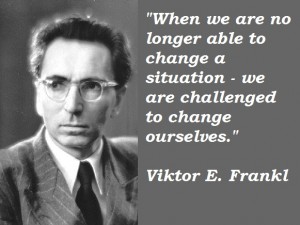
Wednesday Words of Wisdom.

Wednesday Words of Wisdom.


Today's inspiration comes from the amazing Viktor Frankl, whose book Man's search for meaning is a heart breaking must read.

Viktor was an Austrian neurologist and psychiatrist as well as a Holocaust survivor.


What are your thoughts on this statement, and where would you like to make a change to see a difference?